How Caring Paws earned $13 for every $1 on ads within months of opening
Caring Paws is Dr Jessica Goh's purpose-built GP clinic in Vermont South, in Melbourne's eastern suburbs. It opened in 2026 with For Vets doing the whole job: website, photography and video, copy, Google Ads, tracking and the monthly report. This is how a clinic with no reviews and no history reached $13 back for every $1 on ads in its third month of advertising.
- $13 back for every $1 on Google Ads in June, its best month so far
- 35 new clients from Google Ads in that one month
- 112 Google reviews at 4.9 stars within six months of opening
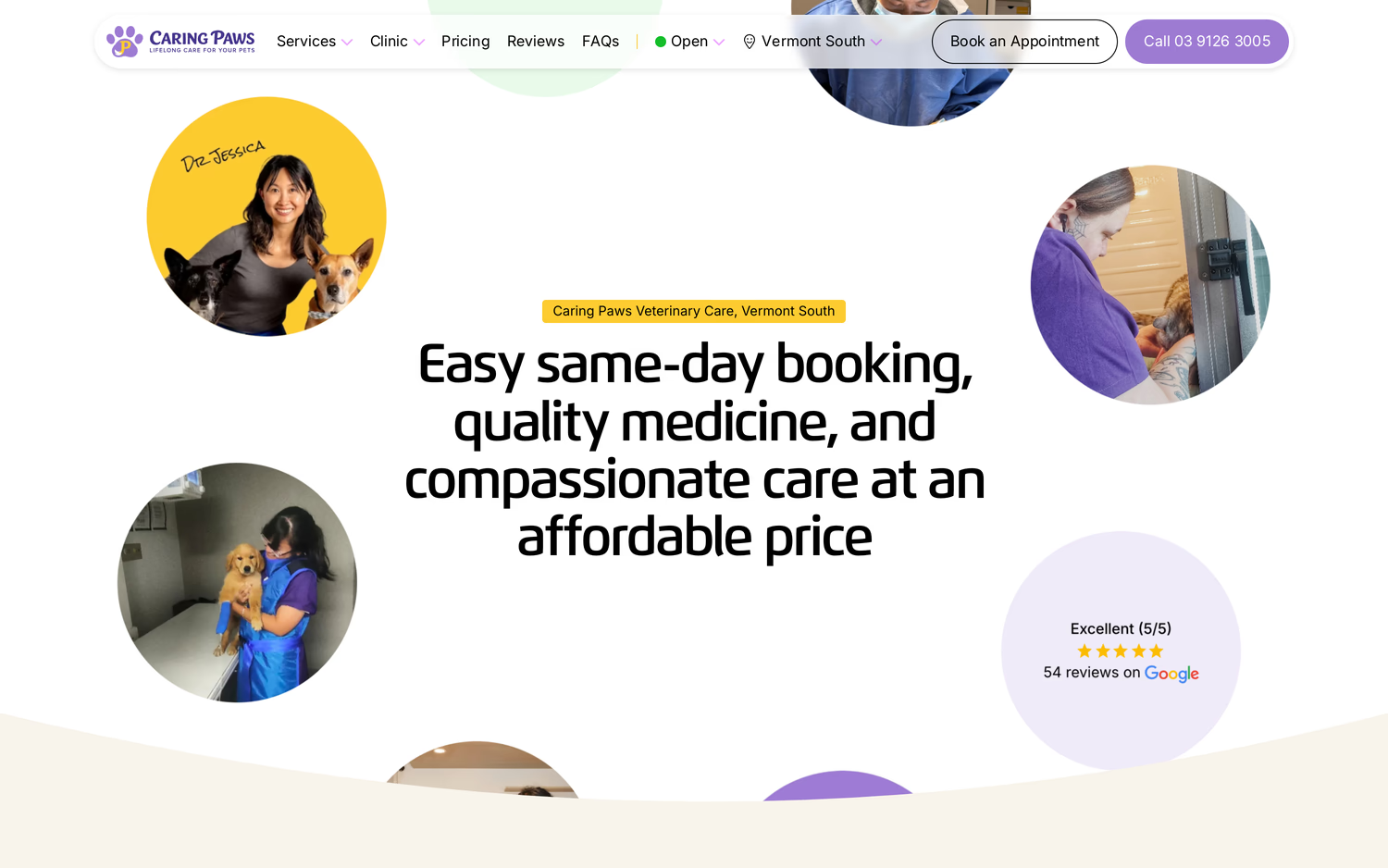
Where they started
A brand-new clinic starts from a blank page: no reviews, no ranking history, no word of mouth. Everything has to be earned from the first week.
What Dr Jess had was a clinic worth showing. It has separate consult rooms and recovery wards for cats and dogs, heated recovery kennels, in-house X-ray and ultrasound, and a laser therapy room. Nobody in Vermont South knew any of it yet.
What we built
- The website, designed from scratch. It carries fourteen service pages, a pricing page with real prices, team bios, a reviews page, FAQs and a booking page open around the clock.
- Photography of the actual clinic. Pet parents see the surgery, the recovery ward with its heated kennels, the laser room, the consult rooms and the team before they arrive.
- A welcome video with Dr Jess. Scripted with her, shot in the clinic and cut to about a minute, it sits on the page pet parents land on from the ads.
- Copy written from the ground up. Every claim was checked against what the clinic does, and prices appear before anyone asks. The headline is a client's own words: "Felt listened to and never rushed."
- Google Ads from a new account. Two campaigns run from a new account. One covers services, with its own ads for desexing, dental and vaccinations. The other, Open Now, catches the moment someone needs a vet today.
- Every call and booking counted. Call tracking, booking tracking and analytics were live from the first week. Google's bidding learns from real clients, and every number in the report can be checked against the clinic's records.
- A monthly scoreboard matched to EzyVet. Each new client is matched by name against the clinic's own records, so the return is counted in dollars invoiced, not clicks.
- Reviews kept current. Fresh five-star reviews are pulled from the Google listing onto the site every couple of months, 58 of them in the last round.
Why it works
A pet parent facing surgery on an animal they treat as family does not book from a clever ad. They book because everything they saw made the clinic feel safe.
Photographs of the real room and the real machines, a vet talking to camera, prices on the page and a hundred reviews do that work. The ad only decides who arrives.
It shows in how people get in touch. Around 80% of the pet parents who call arrive ready to book, and do so on the call or just after it. Online bookings arrive around the clock.
What happened
June was the third month of advertising. Google Ads brought 35 new clients that month, and every $1 spent came back as more than $13, matched in the clinic's own records.
Since launch, every $1 on ads has returned about $8, counting only clients we can trace. Search does its own share: every $1 of the SEO fee has returned about $9 from pet parents who did not know the clinic's name.
The first visit is only the base. Pet parents spend around $1,000 to $1,200 a year at the vet and typically stay three to four years. On that basis, June's 35 new clients are worth around $140,000 over the years ahead.
The clinic holds 112 Google reviews at 4.9 stars and shows up for "vet Vermont South" searches from people who had never heard of it.
Today
The account is reviewed every month against the clinic's records, and the suburb footprint is tuned on what each suburb actually brought in. New reviews keep landing on the site.
The clinic is young; the trajectory is not subtle.
Google Ads and SEO figures: April to July 2026, matched against the clinic's practice records. Long-term value: AMA Pets in Australia 2022 and PetSure Pet Health Monitor 2024 spend figures over a three to four year stay.